
Setting Up Your Anatomy Lab: An Equipment Checklist for Students & Institutions

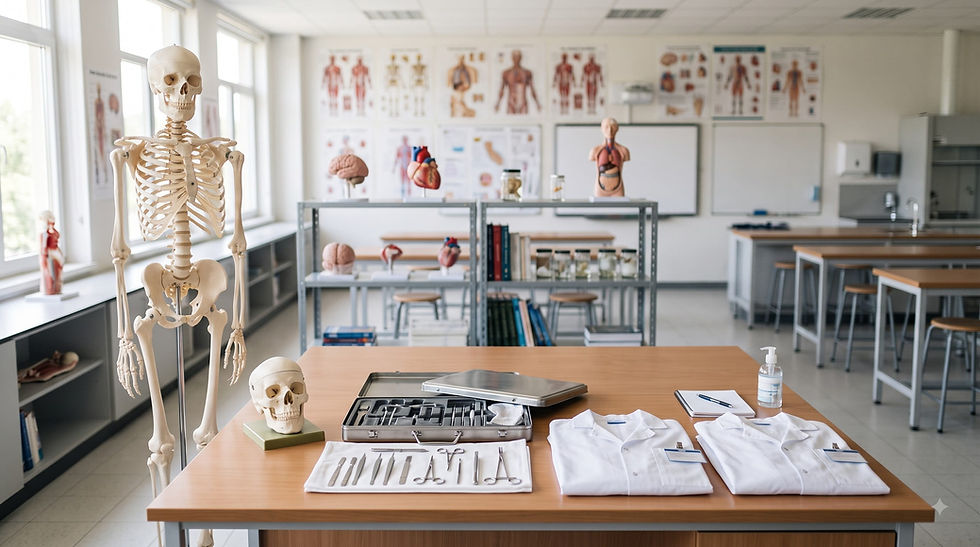
Whether you're a student building out a personal study kit or an institution setting up a new teaching lab, it's easy to either under-equip (and constantly improvise) or over-buy items you'll rarely touch. This checklist breaks down what actually earns its place in an anatomy lab, organized by category, so you can build a setup that matches what you'll really use.
Core Anatomical Models
These form the foundation of any anatomy lab or study setup:
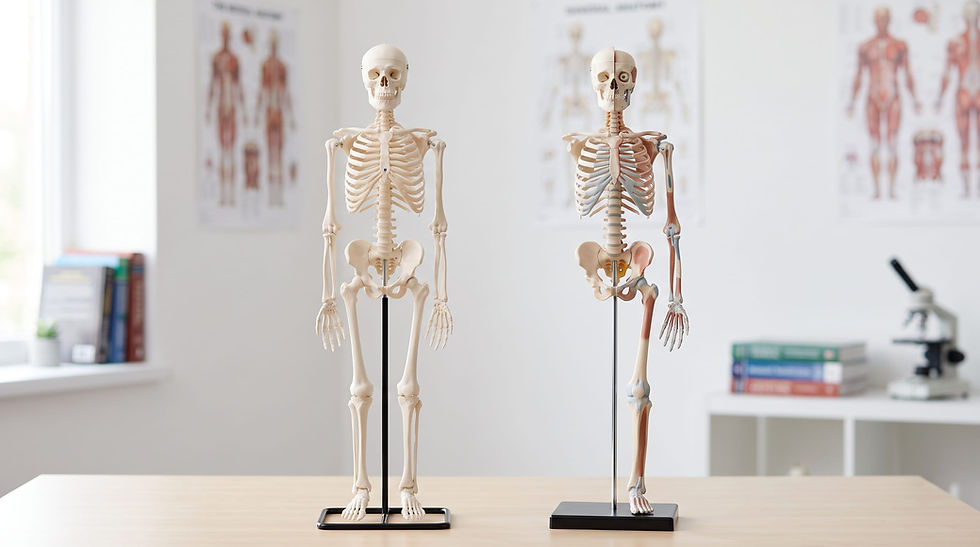
A full human skeleton model (bilateral, for complete paired-bone reference) — the anchor piece most courses are built around
A 3-part skull model — lets students examine the cranial base and mandible separately, which a full skeleton alone doesn't allow as easily
Regional models relevant to your course focus — a female pelvis model for reproductive anatomy, joint models for orthopedic-focused study, or organ models for physiology-heavy programs
Institutions running larger classes often keep both a bilateral model for detailed group teaching and a couple of lighter unilateral models for smaller study groups or take-home revision sessions.
Diagnostic & Clinical Instruments
Even an anatomy-focused lab benefits from basic diagnostic tools, since anatomy and clinical skills are taught together in most modern curricula:
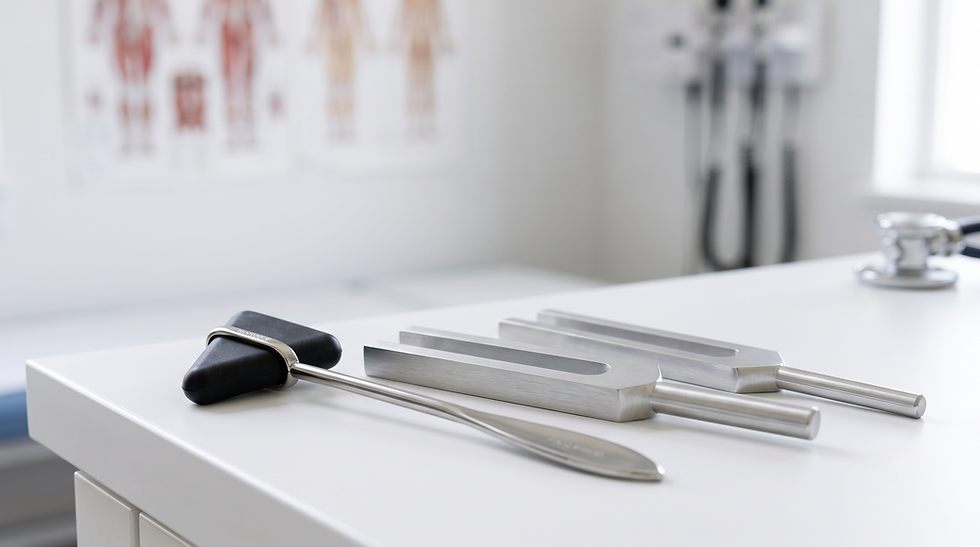
Reflex hammers — for deep tendon reflex practice
Tuning fork sets (128 Hz and 512 Hz) — for vibration sense and hearing tests
A stethoscope, if your program touches on basic clinical examination alongside anatomy
Dissection Equipment
For programs that include hands-on dissection, whether on models, specimens, or in wet-lab settings:
A complete dissection kit — scalpel handle with replaceable blades, straight and curved scissors, plain and toothed forceps, and a probe
Protective gloves and eyewear, if working with wet specimens
A dissection tray or mat, to protect work surfaces and keep tools organized during a session
Personal Protective & Lab Wear
Lab coats — beyond hygiene, a properly fitted lab coat is often a program requirement for practical sessions and clinical rotations
Name badges or ID, where institutional policy requires them for lab access
Study & Reference Aids
Anatomical wall charts or posters — muscular, skeletal, and organ system charts give students a quick visual reference without needing to unpack a full model every time
A storage rack or cabinet — models and instruments last longer and stay organized when they have a dedicated home rather than being stacked on a shared table
Building a Lab in Phases
If budget is a constraint — common for smaller institutions or students building a personal kit gradually — a reasonable order of priority is:
A core skeleton model — the single highest-value item, since it supports the widest range of coursework
A dissection kit — needed from early coursework onward
Diagnostic instruments (reflex hammer, tuning fork) — needed once clinical-skills teaching begins
Regional/specialty models — added as the curriculum goes deeper into specific systems
Wall charts and storage — quality-of-life additions once the core kit is in place
A Simple Institutional Checklist
For institutions setting up a shared teaching lab, a reasonable baseline per 10–15 students is:
1–2 full bilateral skeleton models for group demonstration
1 skull model per small group for close examination
Enough dissection kits for one per student or per pair, depending on lab format
A shared set of reflex hammers and tuning forks, distributed during clinical-skills sessions
Lab coats available or required per institutional policy
Scaling up from there is straightforward once you know which items get the heaviest use in your specific program.
XBONZ supplies anatomically accurate skeleton models, dissection kits, diagnostic instruments, and lab wear for medical, nursing, and allied-health students and institutions across India, the United States, and Europe.

Comments