
The Complete Guide to Choosing a Dissection Kit for Biology & Medical Students


A good dissection kit is one of those things you don't think about until you're halfway through a lab session with a scalpel that won't hold an edge or forceps that slip at the wrong moment. Whether you're in your first year of biology, working through comparative anatomy, or starting clinical training, the right kit makes the difference between a frustrating lab and a productive one.
What Should Actually Be in a Dissection Kit?
Not every kit needs every tool, but a solid general-purpose dissection kit should include:
Scalpel handle and blades — for clean, controlled incisions
Dissecting scissors (straight and curved) — straight blades for general cutting, curved for finer, more delicate work
Forceps (both plain and toothed) — plain forceps for gentle tissue handling, toothed forceps for a firmer grip on tougher material
Probes and seekers — for exploring cavities and separating tissue layers without cutting
Blunt/sharp dissecting needles — useful for pinning specimens and fine separation work
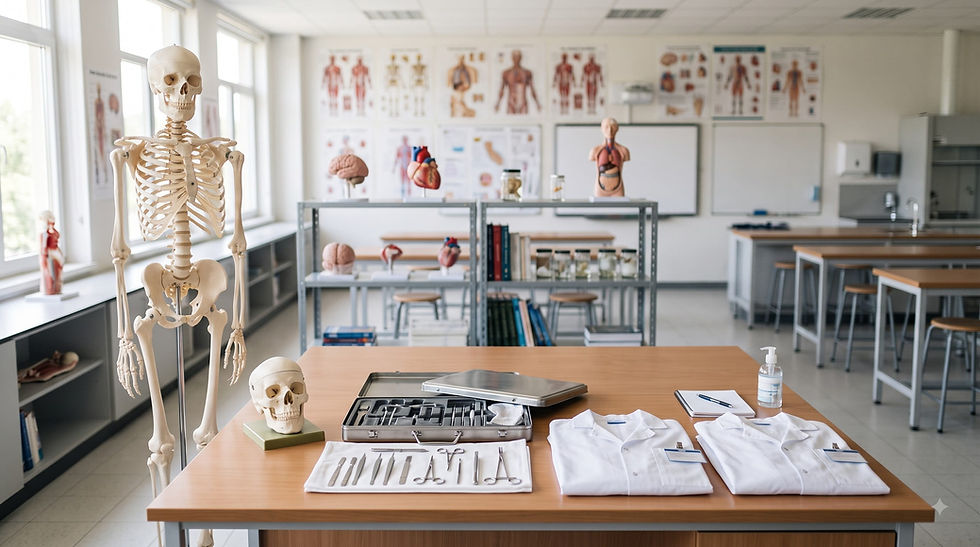
A hard carrying case — protects the tools between labs and keeps everything in one place, which matters more than it sounds once you're juggling a backpack full of textbooks
Some kits also include a ruler, a specimen pin set, or a magnifying glass — nice extras, but not essential if budget is a concern.
Stainless Steel vs. Carbon Steel: Does It Matter?
Most student-grade kits use stainless steel, and for good reason — it resists rust, is easy to clean between uses, and holds up well over a semester or more of regular handling. Carbon steel tools can take a sharper edge, but they require more maintenance (drying immediately after use, occasional oiling) to avoid corrosion. For most coursework, stainless steel is the practical choice; carbon steel is really only worth it for advanced students doing precision work where blade sharpness is critical.
Matching the Kit to Your Course
General biology / high school and early undergraduate courses: A basic 8–10 piece kit covering the essentials (scalpel, scissors, forceps, probe) is usually enough.
Comparative anatomy, veterinary, and zoology courses: Look for a kit with finer-tipped forceps and both straight and curved scissors, since you'll be working with smaller, more delicate specimens.
Pre-med and medical school labs: A more complete kit with multiple scalpel blade sizes, both toothed and plain forceps, and a durable case is worth the investment, since you'll likely be using it across multiple semesters.
Care Tips That Extend the Life of Your Kit
A dissection kit is a reusable investment, not a disposable one, if you take care of it properly:
Clean tools immediately after each use — dried tissue residue is far harder to remove later and can dull blades over time.
Dry everything thoroughly before storing, especially if any part of the kit isn't fully rust-resistant.
Replace scalpel blades rather than trying to resharpen them — a fresh blade gives cleaner, safer cuts.
Store the kit in its case, not loose in a bag, to protect the tips of scissors and probes from bending.
A Quick Buying Checklist
Before you buy, check that the kit includes:
At least one scalpel handle with replaceable blades
Both straight and curved scissors
Plain and toothed forceps
A probe or seeker
A protective case
If a kit is missing more than one of these, it's likely built for a narrower use case than general coursework — fine if that matches your needs, but worth double-checking against your syllabus first.
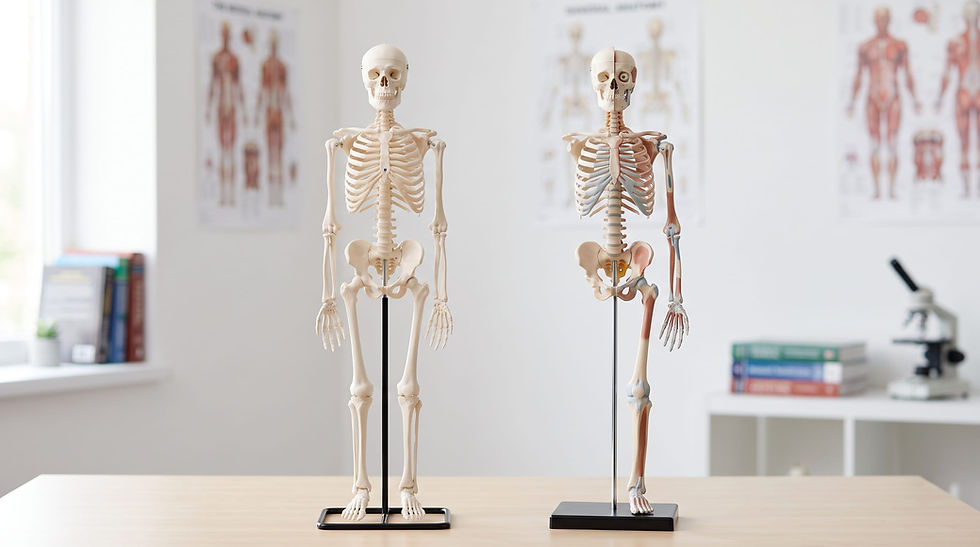
XBONZ supplies dissection kits alongside anatomically accurate skeleton models and diagnostic tools for medical, biology, and allied-health students and institutions across India, the United States, and Europe.
Comments