
Which Human Skeleton Model Is Right for Your Course? A Buying Guide for Medical, Nursing & Physiotherapy Students

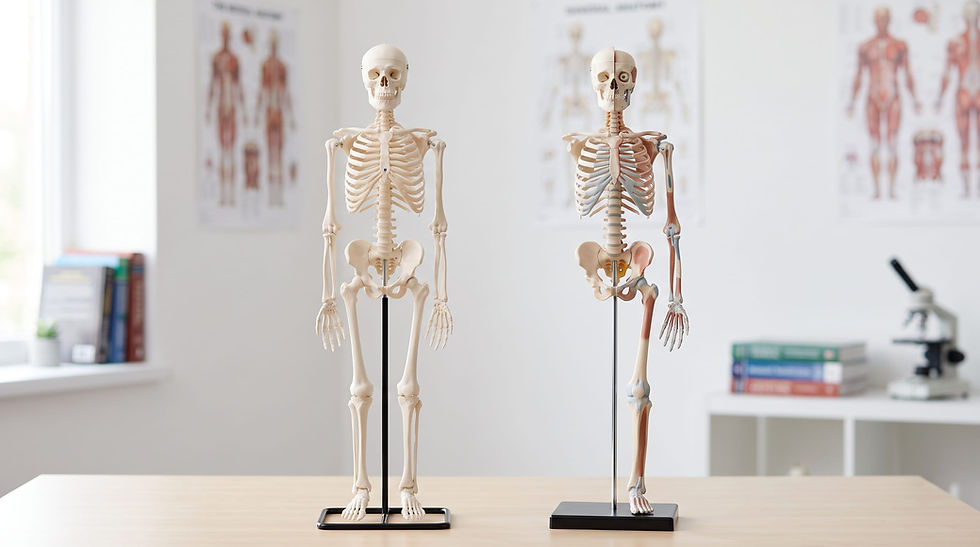
Picking the right skeleton model can feel overwhelming when you're staring at a dozen options online — bilateral, unilateral, half-model, full-model, 3-part skull, disarticulated, articulated. Every course has slightly different requirements, and the "best" model really depends on what you're studying and how deep you need to go. This guide breaks it down simply, so you can match the model to your course instead of guessing.
Start With Your Course Level
First-year students and general anatomy courses usually don't need every single bone in the body separated out. A full articulated skeleton, where the bones are connected and move like a real skeleton, is often enough to understand overall structure, proportions, and how joints work together.
Advanced anatomy, orthopedics, and detailed bone-study courses, on the other hand, benefit far more from a disarticulated model — one where every bone comes apart individually. This lets you pick up a single vertebra, rotate it, examine landmarks up close, and put it back without disturbing the rest of the set.
Choosing a Skeleton Model for Medical Students: Bilateral vs. Unilateral
This is the question most students get stuck on.
A bilateral model includes both the left and right sides of the body — every paired bone (arms, legs, ribs, etc.) is present twice, just like an actual human skeleton. This is the standard choice for full anatomical study, since the human body isn't symmetric in a way you can shortcut.
A unilateral, half-model includes only one side of the body. It's a lighter, more compact, and generally more affordable option — a smart pick if your course focuses on general bone identification rather than paired comparison, or if desk space and budget are tight.
If you're a student who needs to study joints, muscle attachment points, or symmetry between limbs, bilateral is worth the extra cost. If you mainly need a hands-on reference for bone names, shapes, and basic structure, unilateral covers that just as well for less money.
Don't Forget the Skull Type
Skulls deserve their own decision. A 3-part skull — where the calvarium, cranial base, and mandible separate — is the most useful format for serious study. It lets you look inside the cranial cavity, examine the base of the skull (where a lot of exam questions hide), and see how the mandible articulates, all without needing a separate skull model.
If your course is specifically focused on cranial anatomy — foramina, sutures, cranial fossae — a dedicated life-size skull model on its own is worth adding to your kit even if you already have a full skeleton, simply because it lets you handle and rotate it more freely during study sessions.
Beyond the Skeleton: Tools That Round Out Your Kit
A skeleton model answers "what does the bone look like," but most clinical courses also test skills that need separate tools:
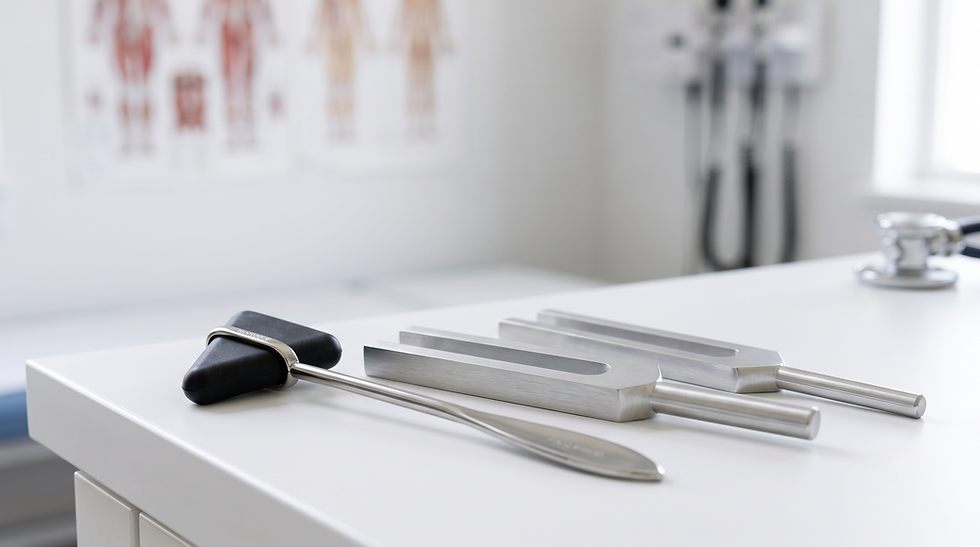
Reflex hammers for neurological assessments — a must for medical school, nursing school, and physical therapy program practicals, whether you're an MD, DO, PA, or nursing student.
Tuning fork sets (typically 128Hz–1028Hz) for hearing tests and vibration-sense assessments — commonly required for Rinne and Weber tests in both classroom and clinical settings.
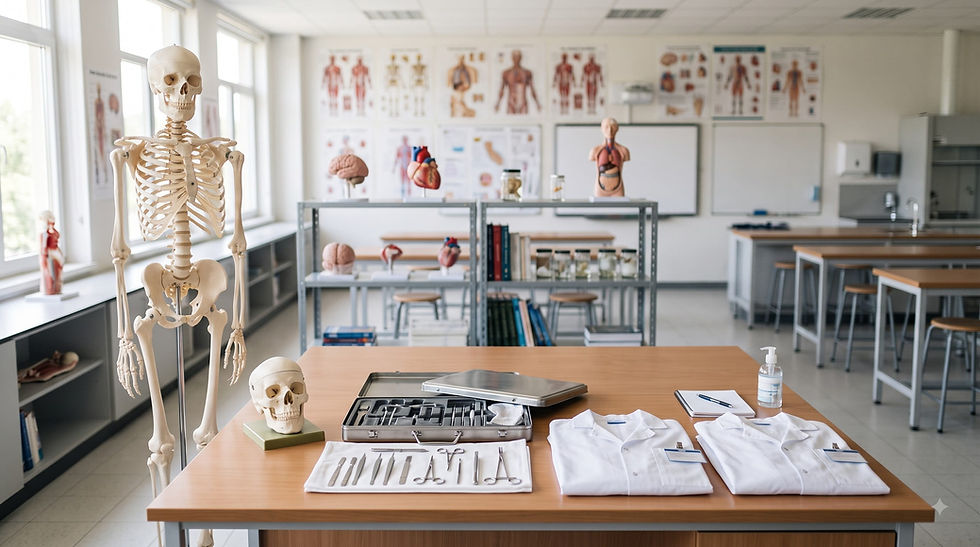
Dissection kits for biology, veterinary, and pre-med lab work, where you need scalpels, forceps, scissors, and probes in one organized case.
Anatomical models beyond the skeleton, like a female pelvis model, for courses that go into reproductive or regional anatomy.
A Simple Way to Decide
Ask yourself three questions before you buy:
Do I need both sides of the body, or is one side enough for what I'm studying?
Will I be handling individual bones closely, or just need an overall reference?
What clinical skills — beyond bone identification — does my course actually test?
Your answers will usually point you toward one of two setups: a bilateral, disarticulated, 3-part-skull model for in-depth anatomical study, or a unilateral half-model paired with separate diagnostic tools like a reflex hammer and tuning fork set for a lighter, more budget-friendly kit.
Either way, look for models built from durable materials that can handle daily classroom use, since a skeleton that chips or loosens at the joints after a semester ends up costing more in replacements than a sturdier model would have upfront.
Looking for anatomically accurate skeleton models, dissection kits, or diagnostic tools for your course? Browse the full XBONZ range — trusted by medical, nursing, and allied-health students and institutions across India, the United States, and Europe, with worldwide shipping available.

Comments